

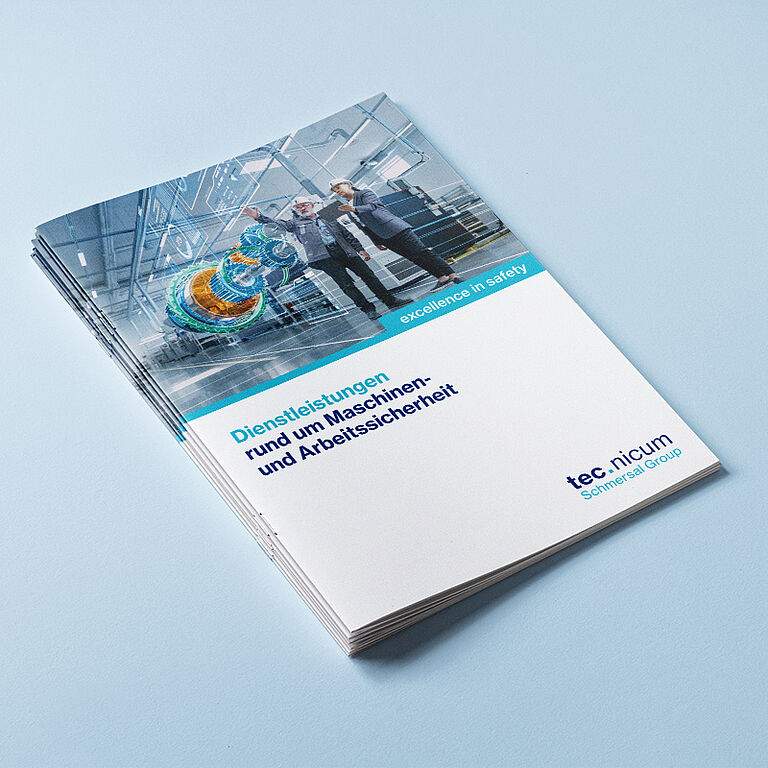
Our new brochure

Machine safety
Machine safety is a key component of modern industrial facilities. It encompasses all technical and organisational measures designed to minimise risks to people, machinery and production processes, whilst ensuring full compliance with legal requirements. It is essential to strictly adhere to current regulations in order to avoid liability risks.
tec.nicum supports manufacturers, integrators and operators in all phases of machine safety – from training, analysis and consultancy through risk assessments and safety-related project planning to retrofit measures, digital applications and conformity assessment.
Why machine safety is more complex today than ever before
Modern machines are highly automated, software-driven and networked (Industry 4.0). The use of AI is causing a massive increase in machine safety requirements. In particular, the new Machinery Directive presents stakeholders with new challenges, as it adapts the state of the art to the digital transformation.
This increases the requirements for:
- Risk assessment and functional safety (safety functions).
- Cybersecurity, to prevent unauthorised corruption of control systems.
- Interfaces between mechanical, electrical and software systems.
What is meant by machine safety?
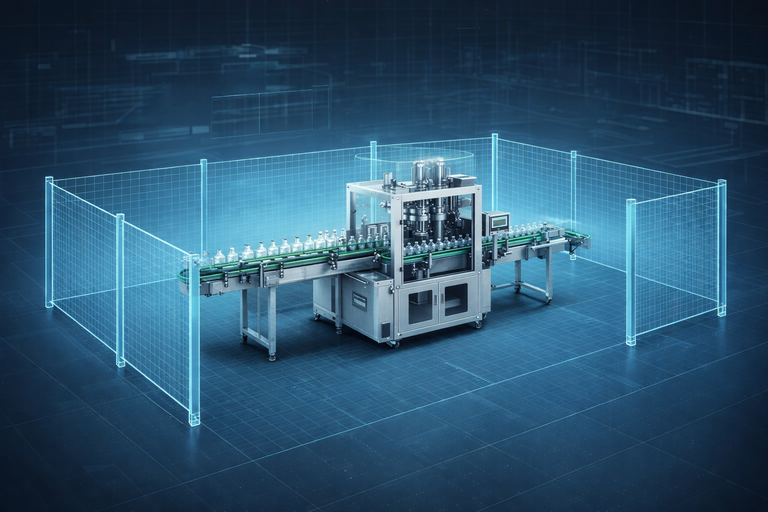
Machine safety refers to all measures taken to identify hazards, assess risks and reduce them to an acceptable level. Accident prevention plays a key role in this context, particularly to prevent physical strain and injuries to operating personnel.
Typical hazards in industry:
- Mechanical hazards (crushing, cutting, shearing) on equipment such as a lifting platform.
- Electrical and thermal hazards.
- Control-related failures and operator errors.
- Software and communication errors.
Risk assessment in accordance with EN ISO 12100 and legal requirements
Risk assessment is the methodological starting point for machine safety. Every regulation requires thorough documentation before a machine is placed on the market. Important guidance in this regard often comes directly from a specialised department of the employers’ liability insurance associations, such as the BGHM in Germany.
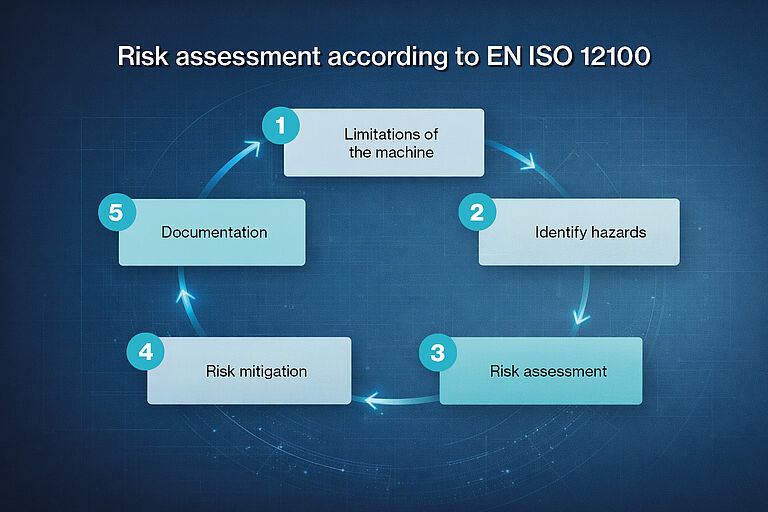
The steps towards a safe machine:
- Defining the machine’s boundaries and applying the correct level of risk management.
- Identifying all hazards in accordance with current guidelines.
- Risk assessment (severity, frequency, preventability).
- Risk reduction through technical measures and the creation of precise operating instructions.
The result: safety-related requirements for design and control
Functional machine safety and the body of standards
Functional safety describes the reliable operation of safety-related control functions. The complex body of standards provides the framework for this, ensuring that uniform standards apply within the EU Member States.
Key standards for the safety-related design of machinery include:
- EN ISO 13849-1 / -2
- EN ISO 12100
- IEC 62061
Commonly used safety functions are:
- Safety gate monitoring
- Two-hand control
- Safe speed monitoring
- Safe shutdown of drives
Key parameters for assessing the effectiveness and reliability of safety functions are:
- Performance Level (PL a to e) according to EN ISO 13849‑1
- Safety Integrity Level (SIL 1 to 3) according to IEC 62061
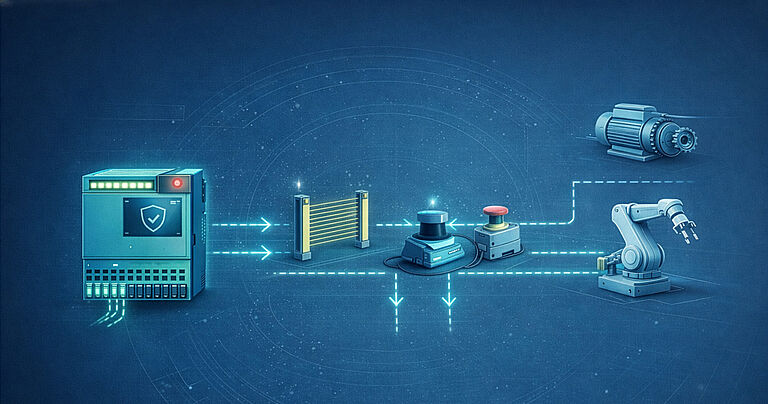
Strategies and technical safeguards in machine safety
To ensure the highest level of safety, the implementation of technical safeguards follows a clear hierarchy. The first step is always intrinsically safe design, which eliminates risks through intelligent planning right from the design phase.
Inherently safe design as the primary measure for risk reduction
- Design with no or reduced hazards
- Prevention of hazardous movements through design measures
- Limitation of energy, forces, speeds and masses
If design measures alone are insufficient, mechanical protective measures are employed. These serve as a physical barrier between people and the source of danger to prevent direct access or contact.
Mechanical protective measures to prevent physical hazards
- Mechanical protective measures
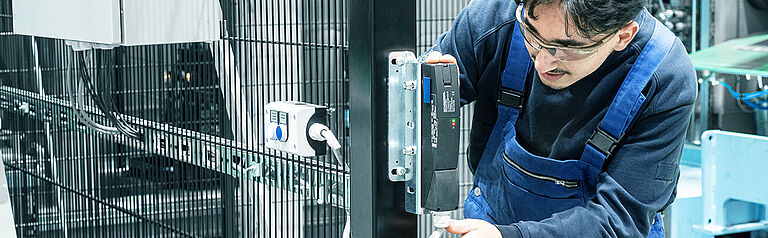
- Separating protective devices
- Movable protective devices
- Guardrails and covers
In addition, non-contact protective devices ensure that hazardous movements are stopped immediately as soon as a person enters the protected area. This ensures both personal safety and process stability.
Typical protective devices for personal and process safety
- Light curtains
- Laser scanners
- Safety edges
- Enable switches
Ultimately, control measures form the backbone of these systems. They ensure functional safety by processing signals redundantly and bringing the machine into a safe state should a fault occur.
Control measures for functional safety
- Safety PLC
- Redundant sensor technology
- Safe fieldbuses
Machine safety throughout the entire lifecycle
The requirements for machine safety do not end with the delivery of a system. It is a dynamic process that affects the design as well as all subsequent phases a machine goes through.
Life cycle phases:
- Design & development
- Construction & integration
- Commissioning
- Operation & maintenance
- Modifications & retrofits
- Decommissioning
Important to note: Any significant change to the system may require a new risk assessment to ensure machine safety is maintained in the long term.
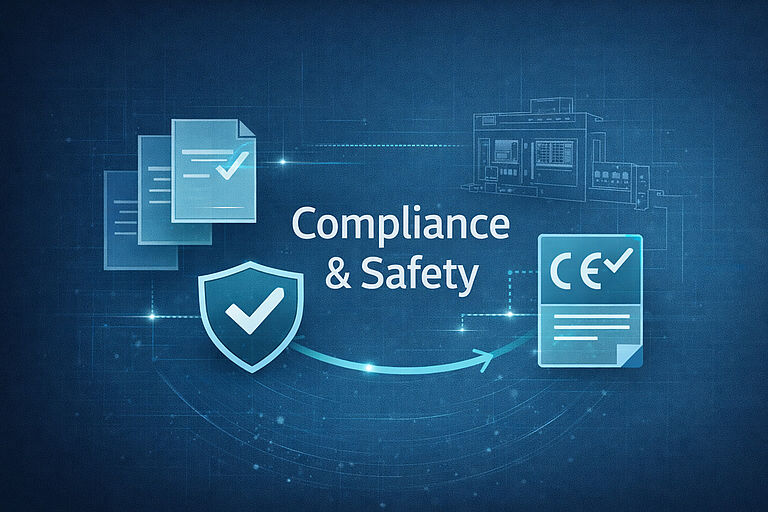
Machine safety for existing machinery & retrofits
Machine safety is often a particular challenge when it comes to older machinery in existing fleets. There is frequently an urgent need for action here to minimise liability risks and ensure the protection of employees.
Reasons for optimising existing machinery:
- missing documentation
- outdated control systems
- new usage scenarios
- changed legal requirements
tec.nicum supports you in all phases of machine safety
As a competent partner, tec.nicum offers manufacturers, integrators and operators comprehensive services to bring machine safety up to the latest standards:
- Analysis of machines/production lines, risk classification, manufacturer-neutral recommendations
- Risk assessments in accordance with EN ISO 12100 – including documentation and prioritisation of measures
- CE conformity assessments: Assessment including checks for ‘substantial modification’ and support throughout the conformity process
- Safety-related project planning: Concept, electrical/mechanical design, project management
- Practical implementation: Installation, commissioning and retrofitting through to turnkey solutions
- Technical documentation & evidence management: Structured, audit-proof storage of risk, testing and validation documents
Digital documentation & evidence management
In a networked industrial world, the analogue file is a thing of the past. Modern machine safety demands digital solutions that are quickly and fully available in the event of an audit.
Elements of modern documentation:
- traceable risk assessments
- digital circuit diagrams
- safety calculations
- test and validation records
Digital, audit-proof documentation is increasingly becoming the standard and is a key pillar for legal compliance in machine safety.
Implementing machine safety holistically and in compliance with standards
Machine safety is not a one-off step, but an ongoing process. From the initial risk assessment in accordance with EN ISO 12100, through the precise design of safety-related control functions, to targeted measures during retrofits, all steps must mesh seamlessly. Only through this holistic coordination can the standard-compliant and safe operation of a machine be ensured throughout its entire service life.
Increasing automation, software-based functions and new regulatory requirements are constantly increasing the complexity of machine safety. A structured and traceable approach is therefore more important than ever today to ensure legally compliant and efficient production.
Your partner for maximum machine safety: get in touch now
tec.nicum supports manufacturers, integrators and operators in implementing machine safety in a technically sound and practical manner. We offer you robust safety concepts and ensure strict compliance with all applicable standards. Thanks to our many years of project experience, we identify potential weak points at an early stage and develop tailor-made solutions for your specific requirements. This not only gives you legal certainty but also optimises the availability and cost-effectiveness of your systems.
Would you like to bring your systems up to the latest standards in machine safety? Contact our experts at tec.nicum for a personalised consultation or a comprehensive safety analysis.
FAQs about machine safety
- What is the difference between the Machinery Directive and the new Machinery Regulation?
Whilst the previous Machinery Directive first had to be transposed into national law by the Member States, the new Machinery Regulation comes into force directly. Above all, it tightens the safety requirements regarding digitalisation, software updates and protection against corruption caused by external access.
- Why has cybersecurity suddenly become part of machine safety?
Due to connectivity (Industry 4.0), hacker attacks can manipulate the control system and thus trigger physical accidents. Cybersecurity is therefore now an essential prerequisite for functional safety in order to maintain the integrity of the protective systems.
- When is a new risk assessment required for existing machinery?
As soon as a ‘significant modification’ is made – for example, through increased performance, functional expansion or conversion to a new level of automation. In such cases, machine safety must be completely reassessed and documented.
- What role does the BGHM play in standardisation?
The BGHM (Wood and Metal Trade Association) is actively represented in various standardisation bodies. It contributes practical experience from accident prevention, which is directly incorporated into modern standards and the applicable testing regulations.
- What is the significance of the operating instructions for conformity?
The operating instructions are an integral part of the machine. They must contain clear instructions for safe use and explicitly warn against possible operating errors. Without legally compliant instructions, the documentation is incomplete and the machine’s safety is not formally guaranteed.
- How are ergonomic factors taken into account in machine safety?
Modern safety concepts consider not only protection against accidents but also the prevention of long-term health damage. The regulations stipulate that unreasonable physical strain must be minimised through the ergonomic design of workstations and control elements.
- Are there specific requirements for special equipment such as a lifting platform?
Yes, for certain types of machinery, such as a lifting platform, additional, specific standards (C-standards) often apply. These define precisely the necessary level of protection and special testing requirements that go beyond the general requirements.
- What is meant by a technical field in standardisation?
In the world of machine safety, a technical field is a highly specialised area (e.g. control technology or ergonomics). Experts from these fields work in international standardisation organisations to continuously advance the state of the art.
- Who is responsible for compliance with the guidelines in the Member States?
In the individual EU Member States, responsibility lies primarily with the distributor (manufacturer or importer). Market surveillance authorities carry out random checks to verify whether the applicable standards and statutory safety requirements have been correctly implemented.


© 2026 tec.nicum